TORONTO — October 26, 2026. A community initiative involving Catherine and other participants at the connected houses at 22 and 24 Linden Street is raising funds for a parrot sanctuary, showing how a simple garage sale can serve a wider purpose.
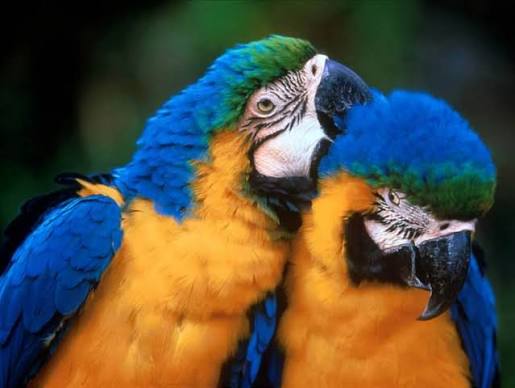
What makes parrots extraordinary?
Parrots are far more than colourful birds. Like all living birds, they are descendants of dinosaurs. Their remarkable abilities include vocal learning, social recognition, problem-solving and manipulating objects with their specialised feet and powerful beaks. Some parrots can learn to associate sounds with objects and situations, although abilities vary by species and individual.
Parrots often form strong social bonds and need companionship, enrichment and appropriate care. Some species can live for decades, making lifelong responsibility especially important. Humans and parrots are distant evolutionary relatives: both descend from an early amniote ancestor that lived more than 300 million years ago, but neither species descended from the other. Their sophisticated minds evolved along very different branches of life’s family tree.
A living rainbow: how many colours can parrots have?
Parrots are among the most vividly coloured birds on Earth. Across the hundreds of parrot species, their feathers can display green, blue, turquoise, yellow, orange, red, pink, purple, white, grey, brown and black, as well as many shades between them. Individual birds may show several colours at once, and some species combine strikingly different hues across their heads, wings, chests and tails.
There is no single scientifically established number of colour combinations for all parrots. The possibilities depend on species, genetics, feather structure, pigment distribution, lighting and, in some domesticated birds, selectively bred colour mutations. A rainbow lorikeet, for example, can show green, blue, orange, yellow and red in one bird; scarlet macaws are celebrated for brilliant red, yellow and blue plumage. Male and female eclectus parrots can look so different that males are mainly green while females are predominantly red and blue-purple.
Parrots also produce colours in unusual ways. Their characteristic red, orange and yellow tones can come from pigments known as psittacofulvins, while blues often result from microscopic feather structures that scatter light. When structural colours and pigments interact, the result can be astonishing shades of green and other complex appearances.
Who first discovered parrots?
No single person discovered parrots. Indigenous peoples across regions where parrots naturally live knew these birds long before European explorers described them. Their beauty, calls and intelligence have fascinated people for thousands of years.
One of the earliest surviving Greek accounts is associated with Ctesias of Cnidus, a physician and writer who described a talking bird from India around the fifth to fourth century BCE. Alexander the Great’s campaigns in India later became associated with parrots entering Greek awareness, but the familiar claim that Alexander personally brought the first parrots to Europe is not securely established by ancient evidence.
The history invites a change in perspective: parrots were never waiting to be ‘discovered.’ They already belonged to ecosystems and human cultures across the world. Today, appreciating their remarkable colours and cognitive abilities also means respecting their complex welfare needs and protecting their future.
A little hope takes flight on Linden Street
Vote for the Parrot Sanctuary Name
Hainica Magazine invites readers to choose their favourite name with a single tap. The suggestions are not official names; the sanctuary team will make the final decision.
Vote for your favourite sanctuary name
Tap a name to cast your vote.
A little name inspiration from Hainica Magazine
The parrot sanctuary initiative does not yet have an official name, so Hainica Magazine would like to offer a few cheerful suggestions for the people behind the project to consider: Peekaboo Parrots, Parrotopia, The Happy Beaks, Rainbow Beaks and The Nutty Parrot.
Each name celebrates something special about parrots, from their playful personalities and colourful feathers to the joy of giving these intelligent birds a welcoming place to call home. These are editorial suggestions, not an announced name for the sanctuary; the choice belongs to the project team.
A neighbourhood sale with a purpose
On Linden Street, books, clothing, furniture, decorative objects and household goods have become part of a community fundraising effort. The sale brings together second-hand items, autumn flowers and pumpkins, with an email address available for contributions.
The initiative is intended to support the creation of a bird sanctuary. The initiative connects local residents with the broader challenge of protecting birds and supporting their welfare.
Why birds need space in Toronto
Toronto’s streets, gardens, ravines and parks provide habitat for resident and migratory birds. Urban environments also pose risks, from collisions with glass to fragmented green spaces and artificial lighting. Native vegetation, appropriate shelter and thoughtfully designed habitat can make a meaningful difference.
A future sanctuary could support birds through habitat conservation and environmental education. The specific services and facilities will depend on the organizers’ plans. A wildlife rehabilitation centre, for example, has different requirements from a protected bird habitat.
From household objects to a community cause
A garage sale is usually a practical exchange between neighbours. Here, the stated objective gives those exchanges another meaning: proceeds are intended to support birds. Participation can take different forms, from buying an item to sharing the initiative with others.
The photographed sale includes books, clothes, wooden furniture, storage pieces and decorative items. The images offer a glimpse of a local, informal fundraising activity rather than a large institutional campaign.
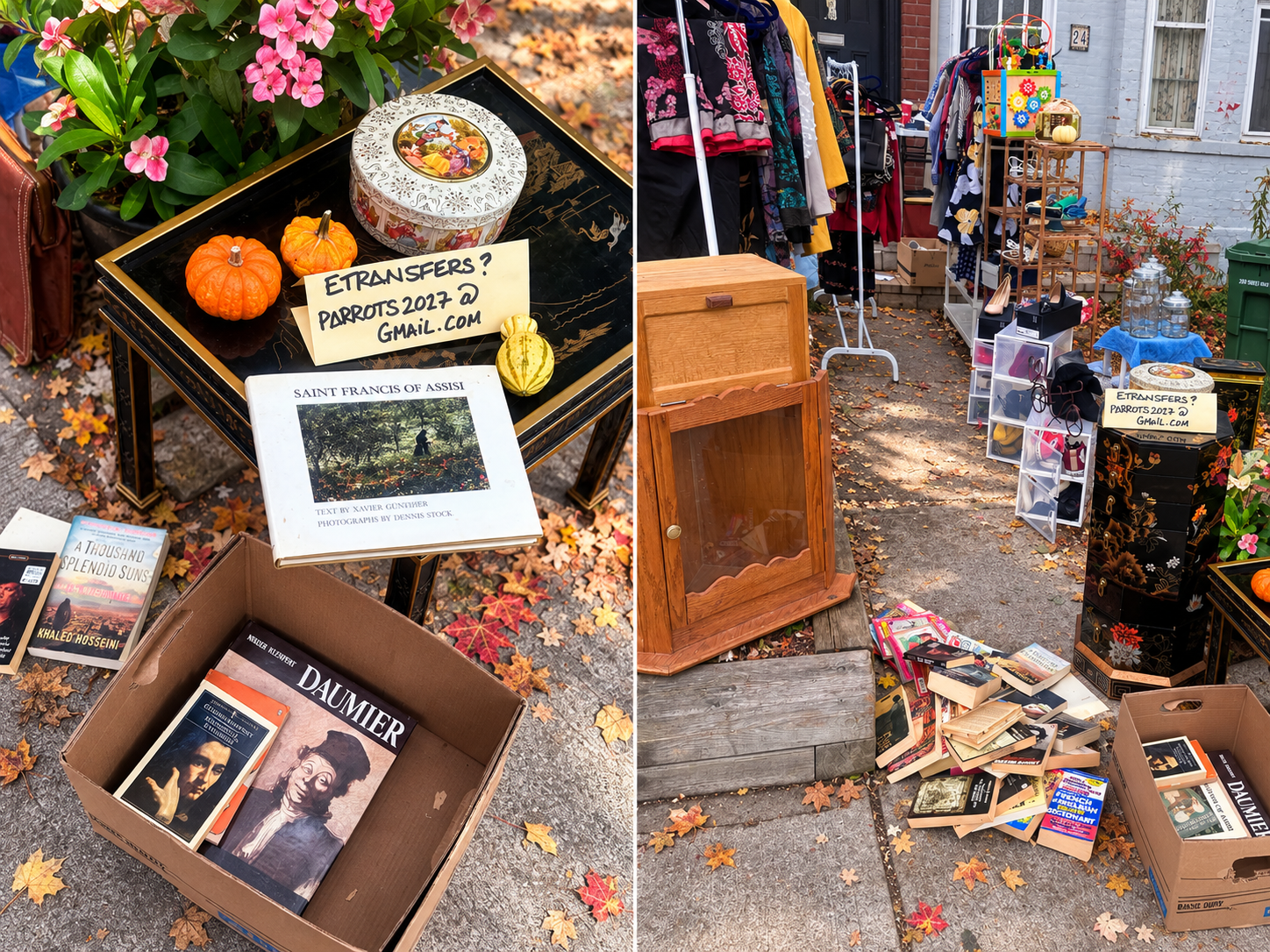
The story begins on Linden Street
The initiative is taking place at 22 and 24 Linden Street, two connected semi-detached houses in Toronto. Catherine and other members of the community are organizing a garage sale to raise funds toward establishing a parrot sanctuary and foundation.
Through the garage sale, Catherine and fellow organizers hope to turn community support into a lasting place of care for parrots.
How to contribute
A handwritten sign at the sale lists the following address for e-transfers: parrots2027@gmail.com. Contributors should confirm the recipient and intended purpose with the organizers before sending money.
Fundraising location: The connected houses at 22 and 24 Linden Street, Toronto, Ontario. The activity is situated in the uppermost part of the house, in the cupola.
Hainica Magazine will follow the project
Hainica Magazine will continue following this local initiative as additional details about its organizers, fundraising and sanctuary plans become available. Sometimes an environmental effort begins with something as ordinary as a table of second-hand books and a neighbour willing to help.
Leave a Reply