HAINICA MAGAZINE / WORLD & HUMAN RIGHTS / OCTOBER 8, 2026
From the deaths of HIV researchers aboard Malaysia Airlines Flight MH17 to Colombian families waiting for missing soldiers and a Chilean man allegedly deceived into joining Russia’s military, the conflict raises a question political speeches rarely answer: who is protecting the people caught inside it?
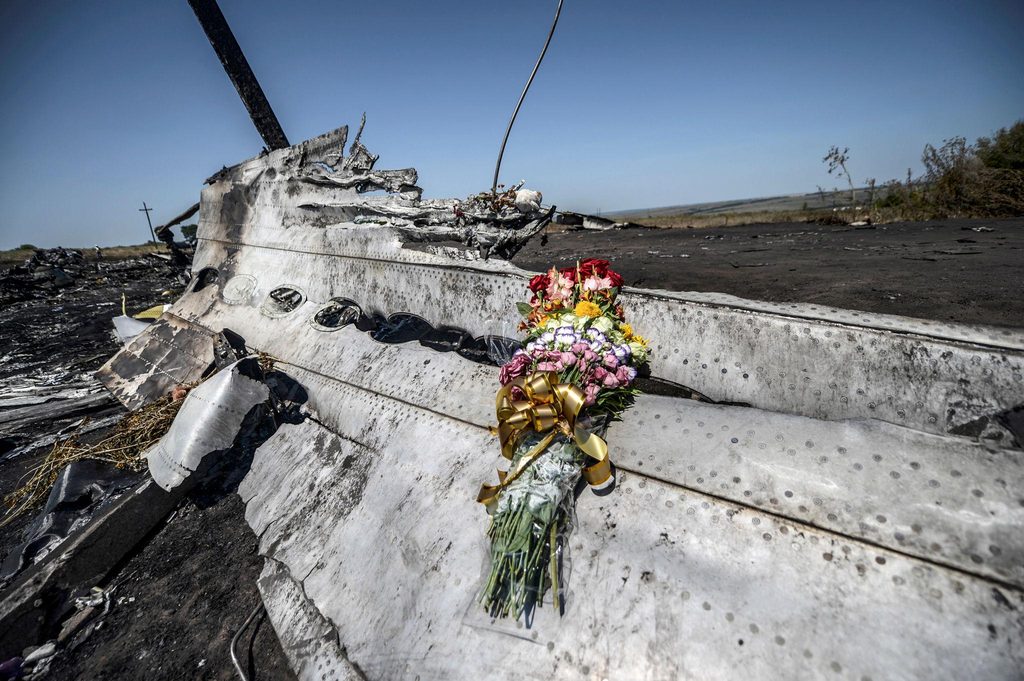
KYIV / MOSCOW / BOGOTÁ / SANTIAGO — On July 17, 2014, Malaysia Airlines Flight MH17 was shot down over eastern Ukraine. All 298 passengers and crew were killed. Among them were researchers and advocates on their way to the International AIDS Conference in Melbourne, Australia.
The tragedy became one of the most visible international consequences of a war that was already underway eight years before Russia’s full-scale invasion of Ukraine in February 2022.
In 2025, the European Court of Human Rights and the Council of the International Civil Aviation Organization held Russia responsible for the downing of MH17. An earlier Dutch criminal judgment established that the aircraft was hit by a Buk surface-to-air missile fired from separatist-controlled territory. This was not a Russian fighter aircraft shooting down an airliner, as some recollections of the event suggest.
But another story circulated alongside the disaster: the suggestion that the cure for HIV might have been lost with the researchers aboard. That claim was never established. And the difference between genuine loss and sensational speculation matters.
THE DOCUMENTED TIMELINE
| 2014 | Russia annexes Crimea; war begins in the Donbas; MH17 is shot down on July 17. |
| 2022 | Russia launches its full-scale invasion of Ukraine on February 24. |
| 2025 | Two international bodies rule Russia responsible for MH17. |
| 2026 | Colombia demands an end to recruiting its citizens; a Chilean family seeks answers about a missing man who travelled to Russia for work. |
The HIV cure that was not aboard MH17
After the crash, early media reporting suggested that as many as 100 HIV researchers or conference participants might have died. The International AIDS Society later confirmed six delegates, including prominent HIV scientist Joep Lange. The early estimate was profoundly misleading.
The death of scientists, health advocates and humanitarian workers was a genuine and irreplaceable loss. But there is no credible evidence that any of them was carrying a secret, proven cure for HIV. Scientific discoveries are developed, tested, replicated and documented through teams and research institutions; a promising idea is not the same as a clinically validated cure.
By 2026, HIV treatment has advanced dramatically, but there is still no broadly available cure. Antiretroviral medicines can control the virus, allow people to live long lives and prevent sexual transmission when viral suppression is maintained. Confusing a researcher’s death with the disappearance of a known cure replaces public-health understanding with an unsupported story.
The victims did not need to be carrying a miracle discovery for their deaths to matter.
The conflict was already eight years old in 2022
The modern Russia–Ukraine war is conventionally dated to 2014. Following Ukraine’s political crisis and the Euromaidan protests, Russian forces occupied Crimea, and fighting began in eastern Ukraine between Ukrainian government forces and Russia-backed separatists. There are much older historical tensions, but that does not mean a single uninterrupted war had been under way for generations.
The invasion of February 2022 expanded the conflict on an extraordinary scale. It did not create it from nothing. Treating 2022 as the entire story erases those who died or were displaced during the earlier eight years.
Russian President Vladimir Putin has repeatedly invoked the protection of Russian speakers and people in the Donbas when justifying military action. That argument raises a direct test: how does prolonged bombardment and displacement protect communities, including Russian-speaking Ukrainians, that have themselves suffered destruction?
The United Nations has rejected the invasion as a violation of Ukraine’s sovereignty. Recognizing Ukraine’s right to defend itself does not exempt its authorities from obligations to civilians, soldiers and foreign nationals serving in its forces. But those obligations must not obscure who launched the full-scale invasion.
The UN human-rights mission recorded at least 372 civilians killed and 2,349 injured in Ukraine in August 2026 alone. Behind those numbers are families whose safety cannot be measured by competing national slogans.
Colombia’s families have become part of this war
One of the war’s least visible international dimensions is the recruitment of Latin Americans. Colombia, with a large pool of former military personnel and a long history of internal armed conflict, has become particularly exposed. Some Colombians joined Ukraine’s armed forces voluntarily. Others have reported misleading promises, inadequate support or difficulties obtaining information about missing relatives.
In a September 5, 2026 statement, Colombia’s Foreign Ministry formally asked both Russia and Ukraine to stop recruiting Colombian nationals and to facilitate the return of those already enlisted. The ministry recorded 863 requests for consular assistance associated with Ukraine and 890 associated with Russia. These were requests spanning many situations—including missing persons, deaths, detention and repatriation—not counts of the dead.
A December 2025 investigation by El País reported that Colombian authorities acknowledged at least 300 deaths among their nationals in Ukraine and documented families struggling to recover remains and obtain promised support. Exact totals remain difficult to establish, especially where people are missing and death has not been confirmed.
To describe this as “Colombia against Colombia” is not a literal description of the belligerents. It is an indictment of a human reality: Colombians can lose their lives fighting in a distant war while other Colombian families struggle at home with the consequences, regardless of which army enlisted them.
Can a foreign volunteer decide to go home?
A central question concerns consent and its limits. Ukraine’s Ministry of Defence states that foreign volunteers are military personnel under Ukrainian law. Its published rules say that voluntary termination of a contract during martial law is possible after six months of continuous service. The International Legion also states that personnel cannot terminate during a combat deployment.
That legal framework is more specific than a simple promise that someone may leave whenever they want. It also makes transparency essential: what were volunteers told before signing, in what language, how were assignments made, and what independent help is available if the terms are disputed or a person is injured?
Ukraine has the right to defend itself. But a government that accepts foreign volunteers must make contract terms comprehensible, protect them from exploitation, ensure proper medical care, maintain communication with their families and provide lawful procedures to leave service. Training, deployment and frontline risk should never be hidden behind misleading recruitment language.
The Chilean who travelled to Russia for work
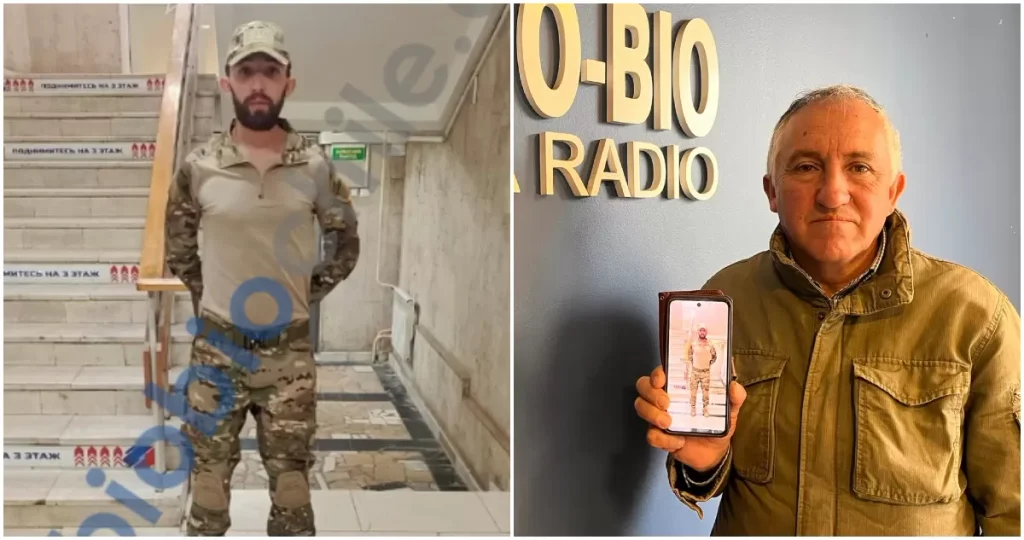
The case of Rodolfo Antonio Chico Ketterer makes these questions immediate. The Chilean man, reported as 30 years old and originally from the Araucanía region, travelled to Russia in May 2026 after seeing an employment offer on TikTok. His father says he expected training for a military-police or security role, not deployment as a combat soldier.
The offer reportedly included travel, accommodation, meals and a signing bonus exceeding 25 million Chilean pesos—approximately US$26,000 at the exchange value cited in contemporary reporting. Importantly, this was described as a signing bonus, not a verified annual salary.
His father says the family lost direct contact with him on June 21. Chilean reporting based on information from the foreign ministry states that Russian authorities reported he had signed a military-service contract on June 3. His family disputes whether that agreement reflected informed, voluntary consent and has sought information from Chile’s consulate in Moscow.
This is a documented allegation of deceptive recruitment and an unresolved disappearance from family contact. It should not be presented as a legally proven kidnapping without an investigation establishing that offense.
One account says a Cuban man in a similar situation passed information to the family about Rodolfo’s reported circumstances. That does not establish that the Cuban man recruited him or caused his disappearance. Responsibility cannot be assigned by nationality or assumption.
The wider concern is nevertheless real: across Latin America and elsewhere, reporting and rights organizations have described people drawn to Russia by civilian-employment promises and later placed in military settings. Employers, intermediaries and authorities should be investigated individually wherever deception, coercion or trafficking is alleged.
What is Russia actually fighting for—and what do Russian speakers want?
One explanation repeatedly advanced by Moscow is that Russia must protect Russian-speaking communities in eastern Ukraine. There is a genuine linguistic and political history behind this argument: the Donbas has long included substantial Russian-speaking populations, and some residents have supported closer relations with Russia or separatism. But speaking Russian, wanting equal linguistic rights and wanting Russia to annex one’s hometown are three different positions.
In April 2014, a survey by the Kyiv International Institute of Sociology found that 28% of respondents in Donetsk and 30% in Luhansk favoured their regions joining Russia; approximately 52% in each region opposed that outcome. A separate Pew Research Center survey conducted that spring found that 70% of respondents in broadly defined eastern Ukraine supported keeping the country united, even while majorities in that region supported official recognition of both Russian and Ukrainian. The polls measured opinions at that time, not the present preferences of populations profoundly affected by occupation, displacement and more than a decade of war.
WHAT RESIDENTS SAID — APRIL 2014
| Region | Favoured joining Russia | Opposed joining Russia |
|---|---|---|
| Donetsk | 28% | 52% |
| Luhansk | 30% | 52% |
| Kherson | 4% | 85% |
| Zaporizhzhia | 6% | 82% |
Source: Kyiv International Institute of Sociology. Percentages do not sum to 100 because other responses are excluded.
The war is also not confined to a couple of northeastern districts. In 2014 Russia took Crimea, on Ukraine’s southern coast. In 2022 it claimed to annex four Ukrainian regions: Donetsk and Luhansk in the east, along with Kherson and Zaporizhzhia in the south. The United Nations General Assembly condemned these attempted annexations and rejected the legitimacy of wartime votes organized under occupation. In June 2024, President Putin publicly demanded that Ukraine surrender all four regions—not merely the areas then under Russian military control—and renounce its ambitions to join NATO as conditions for ending the war.
Those demands show why the conflict cannot be reduced to an unresolved neighbourhood preference. Moscow’s publicly stated conditions also concern Ukrainian sovereignty, military capacity, alliance choices and political influence. Kyiv, meanwhile, argues that conceding territory under military pressure would leave its citizens and national security exposed to renewed aggression.
Would allowing people to choose Russian citizenship solve the problem? Personal freedom to move, apply for citizenship and maintain one’s language deserves respect. But nobody should be compelled to abandon a home merely for speaking Russian, identifying with Russian culture or disagreeing with a government. A resident may want to remain in Ukraine, speak Russian and retain personal ties to Russia without supporting annexation. Nor does issuing passports to residents give a neighbouring state the right to conquer their territory.
The fundamental question is therefore not why ordinary residents refuse to choose one identity over another. It is why authorities turn complex identities into a justification for territorial conquest, military escalation or forced displacement. If protection is genuinely the goal, its test is whether people are safer, can stay in their homes, can use their language and can freely decide their political future without armed coercion.
Sources: Pew Research Center (2014) · KIIS (2014 public-opinion data) · UN General Assembly resolution (2022) · Reuters, Putin’s stated territorial and NATO conditions (2024).
What does protecting a population actually require?
FIVE PUBLIC ACCOUNTABILITY TESTS
- Verify recruitment. Publish the true nature of the position, the term of service, pay, bonuses and the probability of combat deployment.
- Protect informed consent. Provide contracts in a language recruits understand and independent procedures to challenge coercion or deception.
- Guarantee a traceable legal exit. Explain termination rights and restrictions before enlistment, with an effective appeals route.
- Account for every missing or deceased person. Maintain records, enable consular communication and support families seeking information or remains.
- Prioritize civilians. Stop attacks on civilian targets, respect humanitarian law and make civilian protection measurable rather than rhetorical.
Questions about recruitment and troop welfare do not erase the wider political realities of this war. Yet they reveal something that governments too often leave outside the frame: people cross borders for money, security, loyalty or a sense of purpose, and then their families are left to navigate contracts, silence and unanswered calls.
For Russia, claims of protecting Russian-speaking populations must be judged against the human consequences of its invasion. For Ukraine, the need to defend national sovereignty must coexist with enforceable rights and honest treatment of volunteers who serve in its armed forces. For Latin American governments, protecting citizens cannot end when a passport holder leaves the country.
And for the news media, the MH17 lesson still applies. A compelling claim is not automatically a fact. No credible finding showed that a cure for HIV disappeared on that flight. The documented tragedy, the military responsibility and the human lives lost were already more than enough.
A society cannot claim to be protecting people while treating their lives, their consent or their disappearance as secondary details of war.
Sources and documentation: Government of the Netherlands, MH17 international findings; District Court of The Hague, MH17 judgment; Nature, HIV community losses (2014); ABC News Australia, six confirmed AIDS conference delegates; HIV.gov, HIV treatment and cure status; UK House of Commons Library, 2014–2022 conflict timeline; UN Human Rights Monitoring Mission, civilian casualty reports; Colombian Foreign Ministry, September 5, 2026; El País, Colombian families and deaths; Ukraine Ministry of Defence, foreign-service contracts; International Legion official FAQ; Radio Bío Bío, Rodolfo Chico Ketterer; Infobae, family testimony; Stop Russian Recruiters, secondary account of relayed information.
Editorial methodology: reported allegations are attributed; consular requests are not presented as death totals; thematic commentary is distinguished from findings of courts and public authorities.
Leave a Reply