Hainica Magazine | People & Society | 18 October 2026
A reported fundraising initiative for a man known as Don Mario brings attention to the power of solidarity — and the responsibility of turning online support into lasting housing security.
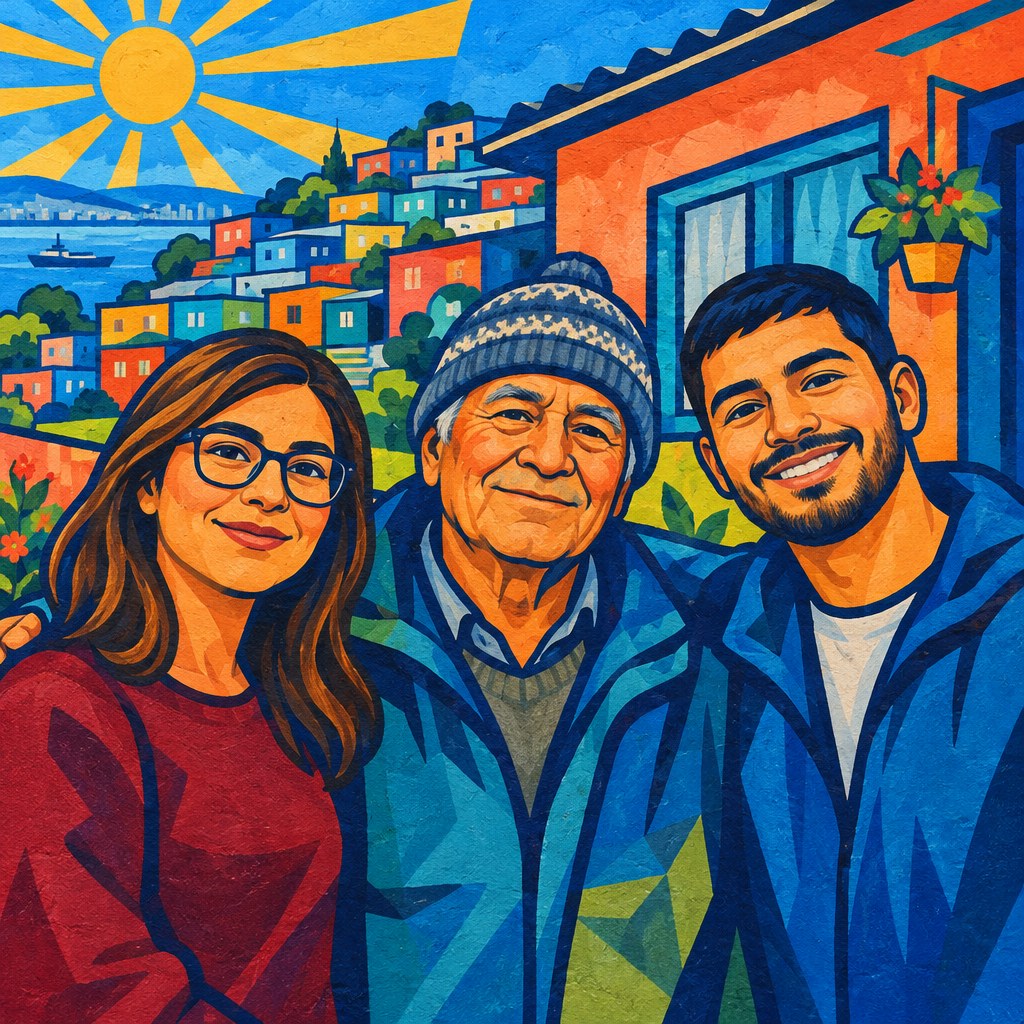
The most important thing about a home is not the number of rooms behind its door. It is the possibility of closing that door at night and knowing that there is somewhere safe to return to in the morning. Across Chile, people who understand that simple human need are finding ways to help neighbors whose circumstances have left them without adequate housing. One effort being shared through Instagram centers on a man called Don Mario and two creators whose public accounts have drawn attention to his situation: Mahirelys Castellanos, known as @mccc2004, and Felipe Andrés Ñancupil Sanhueza, known as @nancupil.oficial. According to information shared with Hainica Magazine, the creators are helping mobilize a collection of money intended to improve Don Mario’s housing situation. The precise fundraising target, amount collected, transfer arrangements and current outcome have not been independently verified by this publication. The campaign’s underlying appeal, however, offers a timely entry point into a larger question: what does it mean for a community to decide that one person’s need for shelter is also a shared concern?
A name at the center of the story
It is tempting to tell a story like this as a competition between generosity and hardship, where the helpers become heroes and the beneficiary serves as a symbol. That would miss the most important person. Don Mario is a human being before he is the subject of a fundraiser. He has a name, a history, relationships, preferences, and the right to be treated with dignity. The publicly supplied Instagram screenshots show content referring to “Don Mario” and a request for help, but they do not establish his full identity, his personal history or the precise legal condition of his present housing. Hainica Magazine does not infer those details. An honest portrait begins by recognizing what is known, what is being reported by campaign supporters, and what remains to be established by direct testimony. If a house eventually results from this effort, its meaning will not be that someone was transformed into an internet success story. It will be that a person received greater stability and more room to shape his own life. Public concern is valuable when it protects that agency rather than replacing it. A donation should be a bridge toward independence, not a reason to claim ownership over the future of the person being assisted.
The people drawing attention to Don Mario
Two Instagram profiles appear in the material shared with the magazine. The first is @mccc2004, displayed under the name Mahirelys Castellanos. The second is @nancupil.oficial, displayed under the name Felipe Andrés Ñancupil Sanhueza. The supplied screenshots show that the first account contains videos and stories discussing Don Mario; they also show the second account’s public creator profile. We have not been able to independently establish from accessible open sources the exact division of responsibility between the two creators, whether both are collecting donations directly, who holds any donation account, or whether either person has made a legally binding housing commitment. Those details should not be invented simply to make a compelling story. The public value of their apparent involvement lies in how a platform normally associated with brief entertainment can direct attention toward a practical human need. Creators can introduce a person to an audience, translate a situation into an understandable goal, and encourage thousands of strangers to consider acting. The most durable form of influence is not a viral moment alone; it is attention converted into responsible, accountable support.
From the screen into the street
Social media gives people the power to travel farther than their bodies can. A neighbor’s concern can become a message, the message can become a video, and a video can reach people who have never visited that neighborhood. This chain can be extraordinary. But it also carries a responsibility that does not disappear when the camera turns off. Once an appeal is public, audiences may reasonably want to know who is organizing it, how donations are held, what will be purchased or repaired, and how the beneficiary’s privacy will be respected. Creators who answer those questions clearly strengthen the cause rather than diminishing its emotional force. A beautiful story does not need exaggerated claims. It needs an understandable purpose and a trustworthy path from contribution to result. The act of sharing may be the first step; the following steps—planning, receipts, permissions, communication, and eventual completion—determine whether fleeting visibility becomes practical assistance. The true measure of an online campaign is therefore not merely its view count but the material improvement it helps make possible.
Why a house is never just a building
Housing provides a foundation for ordinary routines that are easy to underestimate when they are secure. An address can support continuity with health services and community programs. A stable place to keep belongings preserves time and energy that might otherwise be spent repeatedly moving. A quiet room can make rest possible; a working kitchen can allow meals to be planned; a safe entrance can replace constant uncertainty with a little predictability. Those effects should not be romanticized, and no individual home automatically resolves poverty, illness, exclusion or loneliness. Nevertheless, shelter plays a central role in daily wellbeing because it affects so many other decisions. A home also has symbolic importance. It says that a person occupies a place in the world and has some control over it. This is why a housing fundraiser can resonate well beyond the price of timber, concrete or rent. People recognize in the goal an aspiration that many share: to live without the permanent anxiety that a basic necessity may disappear tomorrow. When a community helps someone find that stability, it is investing in a person’s ordinary freedom.
A wider Chilean housing challenge
The situation described in this campaign exists within a broader national debate about access to secure and adequate homes. Chile’s Ministry of Housing and Urbanism publishes an official estimate of the quantitative housing deficit based on the 2024 Census. Following a later data adjustment, the ministry’s study center reports 491,904 requirements for new housing units, representing about 7.5 percent of households nationally. These requirements include different categories of housing need, such as irrecoverable dwellings, households sharing housing, overcrowded secondary family groups, and dwellings that cannot reasonably be enlarged. The figure is not a count of people experiencing street homelessness, and it should not be described as one. Nor can it tell us which category, if any, describes Don Mario. It does establish that housing insecurity and inadequate housing conditions are not isolated questions affecting only a handful of people. Their roots can involve income, prices, household structure, location, land, public investment, and the condition of existing buildings. Community initiatives can make a meaningful difference for particular families and individuals, while public systems remain essential for serving needs at national scale.
What Chile’s official numbers actually mean
Housing statistics are often repeated as though they describe one single experience, but they aggregate very different situations. Some households live in structures that cannot be recovered to an acceptable standard. Others share dwellings because independent housing is beyond their means. Some experience severe crowding; others occupy units where expansion is impractical. The official classification matters because a suitable response differs. Repair may address some problems but cannot solve the absence of an independent dwelling. A new home may meet a different need than emergency accommodation. Secure tenure is another consideration: possession of a structure is not necessarily ownership of the ground beneath it, and an informal arrangement can leave a resident exposed even after significant spending. A thoughtful fundraiser should therefore identify the particular need before promising a particular solution. Is the goal a lawful and durable place to live, the improvement of an existing structure, access to rental housing, or construction on suitable land? Each path raises a different set of costs and obligations. A campaign gains credibility when it explains the distinction in plain language, without turning a person’s private circumstances into a public spectacle.
The difficult arithmetic of compassion
Generosity begins with feeling, but a house must also be built, purchased, secured, or maintained through numbers. A realistic budget would depend on what Don Mario actually needs and what arrangements are possible. Construction can involve land access, design, labor, materials, transport, utilities, inspections and maintenance. An acquisition can involve a purchase price, registration, taxes or fees, and ongoing service costs, depending on the legal structure. Repairs can uncover underlying problems that were not visible at first. None of those items should be assigned a guessed price in Don Mario’s name. The organizers’ verified budget has not been supplied to this publication, and we do not claim to know it. Still, the broader principle deserves attention: a successful donation drive is a combination of care and competent execution. People may donate because a video touches them, but the eventual outcome depends on whether every contribution can be converted into a tangible and appropriate result. Clear estimates and regular updates are not cold bureaucracy. They are one way of honoring the compassion that made the work possible.
How small gifts can become collective action
A crowdfunding campaign changes the scale at which an individual can participate. One person may be unable to purchase or construct a home, yet still be able to contribute a modest amount, share an appeal, offer skilled labor, recommend a trustworthy provider, or help with transport. When such actions are coordinated, their combined value can exceed what any one participant could achieve alone. This possibility is not the same as a guarantee. Fundraising can stall; needs can change; unforeseen costs can arise. But collective action allows responsibility to be distributed rather than left entirely to a person in need or to a single wealthy benefactor. That can be socially important. It turns concern into something people can do, even if their individual financial resources are limited. There is no minimum financial threshold for participating in civic solidarity: careful information-sharing and practical assistance can also matter. At the same time, participation must remain voluntary. Nobody’s compassion should be measured by the amount they can afford to give, and nobody should be shamed for declining a public request.
The particular power of a creator’s audience
Digital creators cultivate relationships that traditional institutions may struggle to replicate. An audience may return daily to hear someone speak, witness everyday routines, or follow local stories. This familiarity can make an appeal feel less distant than a generic advertisement. People may feel that they know the communicator and trust their intentions. That trust is a valuable resource and should be handled carefully. An influencer’s popularity is not a substitute for documentation, just as the sincerity of an appeal is not proof that every logistical decision has been settled. The opportunity is to combine emotional reach with transparent process. A video can draw attention to the need; a written page can explain the objective; a budget can make it measurable; updates can show progress; and independent documentation can help demonstrate the outcome. Each component serves a different purpose. Together they allow audiences to participate thoughtfully instead of being asked to rely only on enthusiasm. Social influence becomes most constructive when it invites people to understand what they are supporting.
A precedent in Felipe Ñancupil’s public story
Felipe Ñancupil is not entirely unfamiliar to Chilean media coverage about social-media attention and everyday opportunity. In January 2025, T13 reported on a young street vendor named Santiago who received attention after Ñancupil offered him a choice between money and a promotional video, and the young man chose the video. That reporting described a very different situation from the campaign discussed here. It does not verify the Don Mario fundraising effort or its results. It does, however, provide documented context for how Ñancupil has previously appeared in a story where online exposure and a person’s economic prospects intersect. Such episodes invite an important question: when creators have the ability to direct an audience’s attention, what use of that capacity most benefits the people featured? Publicity can open doors, but responsible engagement also means respecting a subject’s choices. The person in front of the camera is not a prop; the person’s own priorities should remain central to whatever assistance follows. In that sense, dignity and agency are not secondary considerations. They are part of what makes assistance valuable.
What can be verified today
The core claim presented to Hainica Magazine is that online creators are helping raise money so Don Mario can have a home. The screenshots shared with the newsroom show the public handles @mccc2004 and @nancupil.oficial, identify Mahirelys Castellanos and Felipe Andrés Ñancupil Sanhueza as their displayed account names, and include posts concerning Don Mario. Public web research located independent earlier reporting about Ñancupil, as well as official information about housing needs in Chile. It did not yield independently verifiable details about the fundraiser’s bank account, donation platform, amount already received, exact financial target, property arrangements, construction schedule, or completed housing outcome. This distinction is important. A reader may admire the stated goal without treating every logistical element as verified. The report therefore describes an appeal and the human values surrounding it, not an accomplished transfer of property or a completed house. If organizers publish further documentation or provide direct confirmation, the record can be updated. Precision protects everyone involved: the beneficiary, the people organizing the effort, those considering contributions, and future readers.
Good intentions deserve good records
Transparency in small community projects need not require expensive technology. It can begin with a simple, dated description of the goal, a public explanation of who is responsible for receiving and disbursing donations, a record of payments, and periodic summaries that distinguish money pledged from money actually received. Receipts can be reported without exposing donors’ private details. Major expenses can be categorized without disclosing information that would compromise Don Mario’s security. If land or a dwelling is involved, appropriate legal documentation can establish who will hold rights and what the beneficiary can expect. These steps do not replace personal trust; they allow trust to remain justified as a project becomes more complex. Uncertainty should be explained rather than hidden. For example, a target budget can be presented as provisional while estimates are being obtained. An organizer can say that a contractor has been approached without claiming a contract exists. Small distinctions in language prevent significant misunderstandings when a campaign reaches a large audience. Respect for supporters includes telling them what is known at each stage.
Protecting the person behind the appeal
A social-media campaign can bring support and unwanted exposure at the same time. People may be filmed during vulnerable moments, have their homes scrutinized, or see their private lives discussed by strangers. Anyone organizing assistance should consider how much of the person’s story genuinely needs to be public. Consent should be meaningful, and it should extend beyond a single camera appearance to questions of how recordings, names, and personal information will be used later. Personal documents, precise addresses and account details should not be distributed casually in the name of proving need. The beneficiary’s preferences matter even when a campaign is successful. Some people may welcome ongoing visits and public updates; others may prefer to return to private life once immediate needs have been addressed. Neither choice should diminish gratitude or imply that help was undeserved. The purpose of the fundraiser should be to expand the person’s freedom, including the freedom not to remain permanently visible online. The greatest public stories often end by returning the central figure to ordinary peace.
Solidarity without spectacle
There is a difference between making need visible and making need a performance. Communities can celebrate generosity without reducing hardship to entertainment. An uplifting report can describe the seriousness of inadequate housing while refusing to portray the recipient as helpless. It can acknowledge a person’s difficulties without suggesting that those difficulties define the totality of their character. It can thank supporters without requiring the person helped to express gratitude endlessly before a camera. This distinction matters for journalism as well as fundraising. The camera naturally attracts our attention to dramatic moments: a tear, an embrace, a before-and-after comparison. Yet the practical work is often quiet: making phone calls, checking documents, arranging deliveries, comparing estimates, ensuring that a heater works or that a roof does not leak. These quieter activities are part of the moral substance of the project. A story about solidarity should leave room for them. Help need not become a spectacle to be socially significant, and a person’s dignity should never be a condition of access to assistance.

The civic tradition behind a digital campaign
The tools may be new, but the underlying practice has a long history. Neighbors have organized meals, shared construction skills, collected household goods, responded to disasters, and supported families through difficult periods long before social media offered a place to publish a donation link. Community fundraisers extend that tradition into a world where local and distant participants can coordinate quickly. The contrast between old and new is less important than the continuity between them. In every period, people have faced a choice between treating another person’s hardship as a private misfortune or recognizing an opportunity for collective care. Modern platforms can distribute that decision across thousands of people. Their strength is speed and reach; their weakness is that attention can fade before difficult work is finished. Traditional forms of community organizing offer a valuable lesson: someone needs to remain responsible after the public excitement ends. Long-term follow-through, practical competence, and relationships based on respect are what allow generosity to endure beyond its first announcement.
Housing assistance and the role of public institutions
Community fundraising is meaningful precisely because it responds to individual circumstances, but it should not be portrayed as a substitute for a functioning housing system. Chile has public institutions, regulations and programs concerned with housing and territorial development. The Ministry of Housing and Urbanism documents both the scale and composition of housing need and the policy measures intended to address it. Charity and public policy serve different roles. One mobilizes voluntary support around a specific person or project; the other has obligations to create equitable systems for broad populations. A community may provide a bridge while an individual seeks more permanent support, and institutions may be able to offer guidance on available options. It would be irresponsible to assume that Don Mario is eligible for any particular program without knowing his circumstances. The useful general point is that assistance can be stronger when local initiative and institutional knowledge complement one another. A campaign rooted in compassion does not lose its human character by consulting the relevant housing, municipal or legal professionals. It gains a better chance of producing a lasting result.
Why the details of tenure matter
A roof can offer immediate relief, but long-term security also depends on the rights associated with a home. Property may be owned, rented, occupied under an agreement, or used through another lawful arrangement. Each carries different protections and responsibilities. If donations are used to acquire or improve property, campaign organizers should understand who will own it, who can reside there, what happens if circumstances change, and how recurring obligations will be covered. When land belongs to someone else, construction alone does not automatically create secure ownership. Likewise, improvements to a residence can have limited benefit if a person may soon lose permission to remain. These issues can feel technical beside the emotional appeal of helping someone now. Nevertheless, their purpose is deeply human: to avoid promising a secure future while leaving essential questions unresolved. The ideal outcome of a housing campaign is not a photogenic handover but durable stability. Legal clarity may be invisible in the finished story, yet it can be among the most valuable forms of care.
The difference between a donation and a solution
Money raised is a means rather than an end. A campaign might reach a financial target and still encounter difficulties securing suitable accommodation, coordinating work, or covering future expenses. Conversely, practical help in kind may reduce costs before a monetary target is reached. Materials, specialized labor, professional advice, storage, transportation or temporary accommodations can all affect a plan. That is why measures of success should extend beyond a single number displayed on screen. Has the beneficiary gained greater safety? Is the proposed arrangement appropriate to personal needs? Is the path forward financially realistic? Do those involved understand what still must be done? Such questions are not obstacles to hope. They are how hope is protected from disappointment. A responsible public update can celebrate a milestone while describing the next step. In a campaign driven by emotion, the willingness to be precise about incomplete work is a sign of respect, not a lack of optimism. The goal is not merely to collect support; it is to use support well.
What audiences can do responsibly
Readers who encounter a compelling appeal may feel an immediate desire to contribute. The most useful first step is to confirm that the request comes from an account or organizer actually associated with the campaign and that its purpose is clearly explained. Screenshots can circulate without context, and links may be copied or altered. Where financial contributions are involved, donors can look for an official campaign channel, an identifiable recipient, secure payment procedures, and information about how progress will be reported. People who cannot donate may be able to share accurate updates or offer relevant expertise, but reposting private personal details should not be treated as necessary participation. It is also reasonable to ask courteous questions. What is the current objective? Is the campaign collecting for rent, a purchase, construction, or repairs? What happens if donations exceed or fall short of the target? Who keeps the records? Such questions should be welcomed by serious initiatives because clarity can make the entire community’s help more effective. Compassion and critical thinking work best together.
The meaning of the word ‘home’
The word can evoke many things at once: a roof, the smell of cooking, a cup left beside a window, an address written on a form, the knowledge that belongings will still be there tomorrow. None of those details needs to be grand. Their significance arises from repetition and stability. People build daily life around dependable spaces. When that dependability is lost, routine tasks may become more exhausting and decisions may narrow. This is why efforts to provide a home often speak to people across age, income and geography. Even those who have never experienced insecurity can understand something of the desire to feel safe. Don Mario’s circumstances should not be embellished in pursuit of a moving narrative. The specific life he has lived belongs to him to describe. What readers can recognize without speculation is the broader meaning of the appeal: that secure shelter should be treated as more than an architectural accomplishment. It is part of the environment in which a person can rest, relate to others, make plans and grow old with dignity.
The generosity that does not appear in headlines
Public stories naturally focus on the faces people recognize, but any community effort can also depend on individuals who remain unnamed. Someone may make a modest contribution while managing their own household expenses. Someone may deliver a tool, provide a professional introduction, help verify a budget or simply take time to listen. None of those actions needs a public count of followers to be meaningful. Organizers deserve recognition for the work they do, but it is equally important to understand that solidarity is rarely the accomplishment of one person alone. A fundraising appeal is an invitation: it asks a wider public to decide that another person’s wellbeing deserves attention. The response can involve many forms of labor and care. That shared dimension is the most important part of the social promise. It suggests that a person who feels unseen may discover a network of fellow citizens willing to help. And it reminds those watching that human value cannot be reduced to fame, wealth, influence or the ability to attract an audience.
A good outcome is one that lasts
The most memorable moment in a campaign may be the announcement that a goal has been reached, but the most meaningful moment can occur much later, when the initial excitement has passed. Does the home remain safe and usable? Are utilities accessible and manageable? Can the resident make ordinary choices without recurring insecurity? Have promised obligations been completed? Is the person able to enjoy the result privately? These are less glamorous measures than a viral video, yet they define whether a project has achieved its purpose. Don Mario’s campaign should ultimately be assessed by evidence of its real outcome, not only by the warmth of the message surrounding it. If the goal changes, supporters deserve to understand why. If the project succeeds, clear documentation can preserve the story as a trustworthy example for others. If unexpected difficulties emerge, transparent communication may allow the community to respond constructively. Every serious act of solidarity deserves an ending grounded in fact. That standard makes public kindness more sustainable and more likely to inspire responsible repetition.
What the campaign tells us about Chile
Chile contains extraordinary contrasts, and no single viral appeal can summarize the whole country. A society can be generous while still facing difficult structural problems; its people can respond lovingly to a neighbor even as public institutions, markets, and households struggle with housing pressures. It is possible to celebrate the visible willingness to help without claiming that every need is met or every campaign succeeds. The inspiring element is not national perfection. It is the willingness of people to take another person’s circumstances seriously enough to act. When Hainica Magazine speaks of the beauty of Chilean solidarity, it means that very human possibility: a network of individuals can turn attention toward practical help. The greatness of a country is not measured only by the monuments it builds or the indicators it reports. It can also be seen in its smaller decisions, including whether someone who has little power or visibility is treated with respect. Public care becomes meaningful when it is offered without condescension and carried through with care.
How we should tell stories of help
Human-interest journalism faces a recurring temptation to make complex lives sound simple. One person is cast as a rescuer, another as rescued, and the audience is given a satisfying conclusion. Real lives resist those categories. People who receive assistance may also be helpers in other relationships; creators who promote a cause may be learning as they proceed; supporters may disagree about the best way to achieve a goal. A careful report makes room for complexity. It avoids claiming to know a beneficiary’s feelings unless they have spoken. It refuses to confuse fundraising intentions with completed property transactions. It names available evidence and indicates what is missing. These choices may make the article less dramatic, but they also make it more respectful. Hainica Magazine believes that celebrating kindness and maintaining editorial standards are complementary responsibilities. The value of a story should come from the actual human conduct it illuminates, not from invented quotations, implausible timelines or descriptions that cannot be supported. People deserve accurate narratives, especially when they are vulnerable.
The next questions for the organizers
To follow this developing story responsibly, several practical questions remain open. What specific type of housing assistance has Don Mario requested? Has he consented to the public campaign and to the use of his image? Who is authorized to receive funds, and what safeguards protect them? What fundraising target has been set, and on what budget is it based? Are any offers of property, materials, construction work or professional services confirmed? How will supporters learn the outcome? Has a timetable been established, and what happens if that schedule changes? None of these questions is an accusation. Each is an opportunity to clarify how the compassion already being expressed can become durable assistance. The answers would also allow future reporting to move from the appeal itself to the concrete progress made. Until they are independently established, the article will not invent them. A campaign that welcomes accurate reporting and clear recordkeeping can serve not only Don Mario but also other communities seeking reliable ways to organize help.
The ethical responsibility of a large platform
An online audience can be immense, yet the quality of support is not guaranteed by size. A creator with thousands or hundreds of thousands of followers can make a little-known issue visible in an afternoon. The same speed may amplify misunderstandings. Names can be misspelled, timelines can be compressed, and emotional language can begin to circulate as fact. Editorial discipline is therefore especially important when a private citizen becomes part of a widely shared campaign. Readers should be given a clear distinction between a documented action and an aspiration. Photographs should be credited correctly, and commissioned illustrations should be identified as such. Images that depict scenes from an appeal should not be presented as a historical record unless they actually are one. In this report, the accompanying artwork is conceptual and illustrative. Its function is to honor the general theme of community solidarity, not to prove that a particular meeting, donation or housing handover happened exactly as shown. Respect for truth is part of respect for the people represented.
A practical model for community support
The principles visible in many successful civic projects can be expressed as a cycle rather than a dramatic single gesture. First comes listening: understanding what the person actually needs and wants. Then comes planning: checking options, responsibilities, costs and feasibility. Third is mobilization: inviting voluntary money, services, expertise or labor through legitimate channels. Fourth is implementation: carrying out the agreed steps while maintaining records and communicating changes. Fifth is continuity: ensuring that the result remains useful and that its recipient retains dignity, privacy and agency. These stages are not a formula guaranteeing success. They describe how good intentions can be translated into practical decisions. They can also help a campaign recognize when professional or institutional guidance is required. The process should stay proportionate to the scale of the project; a modest repair may not need the apparatus of a large organization, while a property purchase requires more formal attention. In every case, responsible execution honors the generosity of the people who offered to help.
Can one action really change a country?
One fundraiser will not erase a national housing deficit, and it should not be asked to carry such an impossible burden. But its scale does not determine its moral worth. For the person receiving help, a single secure home can represent an immense change. For participants, the experience of acting together may alter how they respond when another need appears. For observers, the example may demonstrate that compassionate action can be organized rather than merely admired. This is how public culture changes through ordinary decisions: people see an approach, consider its results, learn from its shortcomings, and sometimes repeat it with greater care. The influence of a campaign should not be measured solely by how many people applaud it, but also by whether it encourages realistic, transparent and respectful cooperation. Hope becomes a public resource when it is joined to methods others can understand. A generous impulse is an important beginning; the deeper contribution is a result that can stand on its own and a process worthy of people’s trust.
A message to the people watching
Not everyone can solve another person’s housing problem. Most people live within their own obligations, budgets and uncertainties. Nobody should be made to feel inadequate because they cannot give money or volunteer time. The invitation of a story like this is more modest and more enduring: notice one another. Ask whether assistance is wanted. Share accurate information. Protect someone’s privacy. Offer help you can sustain. Respect the practical knowledge of people working on a problem, and be willing to learn when an initial plan needs to change. It is possible to admire the apparent intentions of a campaign and still wait for verified details before contributing. There is no contradiction between having a generous heart and asking careful questions. Those habits reinforce each other. They allow communities to retain both their humanity and their judgment, especially when an emotionally powerful video invites an immediate response. The purpose of solidarity is to expand possibilities for real people, not to produce applause for the audience watching from afar.
An ending that has not yet been written
At this stage, Hainica Magazine cannot report that Don Mario has already received a home, that a specific sum has been collected, or that a construction project has been completed. The information made available to us supports the account of a fundraising appeal being shared around his housing needs. Its conclusion remains to be confirmed. That openness is not a weakness in the story. It is part of its honesty. Many of the most important acts of care begin before anyone knows whether the plan will work. What matters next is whether the attention surrounding Don Mario can be turned into reliable assistance while respecting his voice and his rights. If the effort achieves its aim, the result deserves recognition. If obstacles appear, those too deserve accurate explanation. For now, the image worth holding is not a staged ceremony or a triumphant announcement. It is the possibility that people will cooperate patiently enough for someone to gain a safer and more secure place to live. That would be an achievement measured not in views, but in everyday life.
Editor’s note and sources
This feature is based on screenshots supplied to Hainica Magazine identifying Instagram accounts @mccc2004 (Mahirelys Castellanos) and @nancupil.oficial (Felipe Andrés Ñancupil Sanhueza), accompanied by a report that money is being collected to help a man called Don Mario obtain a home. Hainica has not independently authenticated the underlying donations, collected amount, beneficiary’s circumstances or final outcome. Public background reporting consulted includes T13’s January 8, 2025 report about Felipe Ñancupil and a young vendor, and official housing data from Chile’s Ministry of Housing and Urbanism. The 491,904 figure cited above is the updated quantitative housing deficit based on the 2024 Census and should not be confused with a homelessness tally or with Don Mario’s personal situation. The illustrations accompanying this article are newly produced editorial artwork inspired by the theme of solidarity, not documentary photographs of an actual transaction. The magazine welcomes verifiable campaign updates and corrections to factual details. Readers seeking to support a fundraiser should consult the organizers’ official communications and verify its terms directly.
A closer look at the language of dignity
Words influence how audiences understand a person in need. To say that someone needs housing is different from defining that person entirely through deprivation. The first describes a challenge; the second risks erasing a life. Journalism can avoid that by making the subject’s own choices and interests visible where they are known and by refraining from inventing them where they are not. Don Mario’s story deserves this distinction. A community appeal can invite empathy without portraying a person as passive or incapable. Assistance may be a practical response to circumstances that an individual cannot reasonably resolve alone at a particular moment. Accepting that help is not a personal failing, and offering it does not give anyone the right to direct another person’s life. A secure place to live should expand choice, not narrow it. This approach also changes how success is described. Instead of saying that creators ‘saved’ someone, a more accurate account might explain the specific support organized and the resulting change in housing conditions once those details are verified. Modest, careful language often conveys greater respect than dramatic declarations.
Why follow-up reporting matters
The internet’s attention tends to gather around beginnings and milestones, while the middle of a practical project receives less notice. A fundraiser may attract thousands of comments on the first day, then confront months of administrative or construction work that does not lend itself to spectacle. The journalistic obligation does not end when public interest wanes. Follow-up can establish what was purchased, which promises were fulfilled, and whether the intended beneficiary can actually use the result. That reporting should be proportional, respectful, and grounded in available records rather than intrusive observation. The same principle protects donors, whose trust can be damaged when campaigns vanish without updates. It also protects organizers from unfair speculation when setbacks are explained promptly and accurately. For a project centered on housing, follow-up is particularly important because the durability of the arrangement may matter more than the day it is announced. Journalism contributes best not by demanding constant visibility from the beneficiary but by seeking appropriate evidence of progress and outcome.
When visibility creates opportunity
Visibility is sometimes described as if it were a material resource in itself. It is not: a view on a video does not repair a roof, buy a property, or establish a legal right to housing. Visibility becomes useful when it allows a specific need to be matched with people or organizations capable of responding. That conversion depends on clarity. Audiences need to understand what assistance is requested and how it will be managed. Supporters with relevant skills need enough information to know whether they can genuinely contribute. Organizers need to protect the beneficiary’s time and privacy as incoming offers are assessed. A powerful public message should therefore make participation easier without making unsupported promises. This is one reason clear requests are often more effective than vague pleas. When the scale of the need has been established, a campaign can invite donations or services appropriate to that need; until then, careful public updates can explain what is being investigated. Turning sympathy into practical assistance is an organizational task as well as an emotional one.
Trust as a shared responsibility
Trust is often discussed as something an organizer must earn, but healthy community projects depend on responsible behavior from everyone. Supporters should avoid spreading rumors or demanding disclosure of intimate personal facts. Creators should accurately describe the plan and distinguish estimates from confirmed commitments. Service providers should be clear about costs and limits. Journalists should verify what they can and avoid filling gaps with imagination. The beneficiary should have meaningful opportunities to accept or decline proposed arrangements. When these responsibilities are respected, the campaign can create a cooperative environment rather than a chaotic one. The opposite is also true: sensationalism, ambiguity and pressure can turn a generous movement into conflict. Public confidence grows when ordinary questions receive ordinary answers and when errors can be corrected without embarrassment. This is not an argument for perfection. Community work can be improvised and still be honorable. It is an argument for honesty, especially when the stakes are as important as a person’s future home.
The difference between hope and certainty
Hope points toward something worth working for; certainty is a claim about what has already been established. The two should never be confused. It is hopeful to say that a group of people wants Don Mario to have a more secure place to live. It would be a different and currently unsupported claim to say that a home has been fully funded, purchased or delivered. The distinction matters because readers may make financial decisions based on the words they see. It also matters to Don Mario, who should not be placed under the pressure of a public promise that may not yet be achievable. Responsible enthusiasm gives people space to work, to revise their plans, and to communicate honestly about progress. The best community campaigns are not those that promise the most dramatic outcome in the shortest video. They are those that build a durable relationship between a clearly identified need, the people willing to help, and the practical steps that follow. That is the form of hope most likely to deserve lasting confidence.
The home as a beginning
A home is not the end of someone’s story. It can be the beginning of a more stable chapter, with its own responsibilities, difficulties and opportunities. A recipient may still need support with income, utilities, accessibility, healthcare, local connections or ordinary maintenance. Those considerations should be handled according to the person’s actual circumstances, rather than assumed from public imagery. The meaning of housing assistance is therefore not that every problem disappears. It is that one essential source of vulnerability may be reduced. This is a worthwhile ambition in itself. In public discourse, generosity sometimes becomes an expectation that beneficiaries should immediately prosper in every other respect. That expectation is neither fair nor realistic. A genuine act of care can be valuable without producing an inspirational transformation on demand. If Don Mario receives the housing support being sought, the achievement should be understood on its own terms: greater opportunity for safety, continuity and personal choice, not an obligation to embody anyone else’s ideal story.
Further reading
Ministry of Housing and Urbanism: 2024 Census housing deficit | Chile’s CASEN 2024 social survey | T13: Previous reporting involving Felipe Ñancupil | Mahirelys Castellanos on Instagram | Felipe Ñancupil on Instagram.
Leave a Reply