
A little mystery. A lot of imagination.
October brings a different rhythm to the city: autumn colour, carved pumpkins and stories shared after dark. Hainica Magazine welcomes Halloween with a seasonal artwork celebrating imagination, neighbourhood traditions and the pleasure of a little mystery.
Happy Halloween · October 31, 2026.
Behind the familiar Halloween symbols
As October 31 approaches, familiar decorations carry histories that extend beyond the shop window. The Library of Congress traces the jack-o’-lantern tradition to Irish turnip carving and the folklore of Stingy Jack. The story concerns a wandering figure with a light inside a hollowed-out turnip; it belongs to folklore rather than documented biography.
The same account describes several possible influences on trick-or-treating, including Scottish guising and older door-to-door customs. It presents competing explanations, rather than a single undisputed origin. That distinction matters: a tradition can be familiar today while its earlier development remains complicated.
How costumes and candy became everyday culture
The Smithsonian’s museum collection preserves Halloween objects, including commercial costumes. Its account identifies Ben Cooper, founded in Brooklyn in 1937, as a costume manufacturer whose products reached shoppers through major retailers.
Another Smithsonian history examines the shift from homemade treats toward packaged sweets. Together, these objects show how domestic customs, manufacturing and retail helped shape the holiday’s modern appearance.
Halloween in Hainica
Our October artwork brings those recognisable motifs into an autumn Toronto setting: pumpkins, rooftops, leaves and an evening sky. The image introduces this seasonal culture feature and joins the magazine’s moving announcements on the homepage.
Readers can explore the linked archival and museum accounts for a closer look at the objects and stories behind the celebration.
- The Original Jack-o’-Lanterns: Born from the Irish folklore of “Stingy Jack”—a mythical blacksmith condemned to wander the Earth with a burning ember inside a carved turnip—locals carved beets and turnips to ward off his ghost.
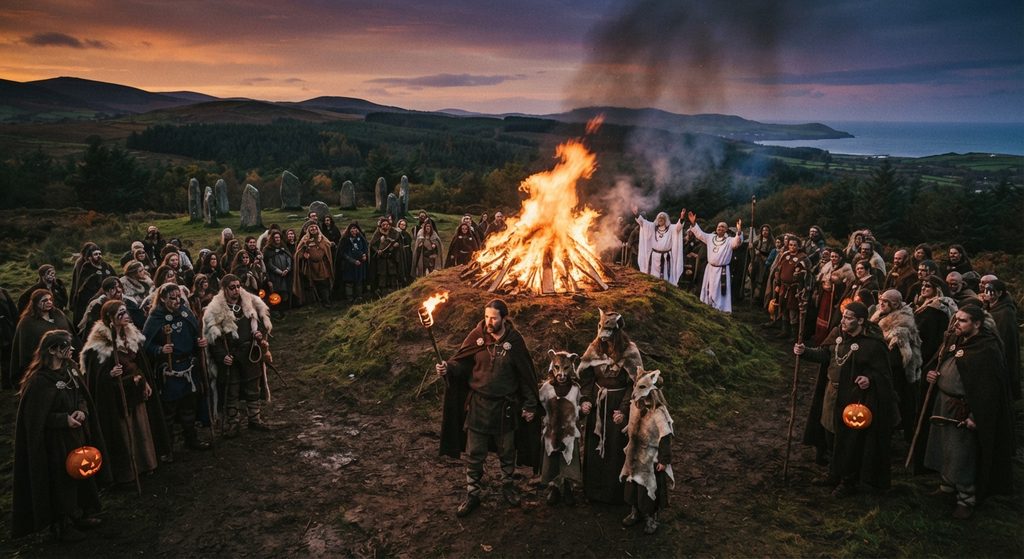
- Guising and Disguises: Celts donned animal skins and masks to blend in with wandering spirits, a custom that evolved into modern costumes.
- The Sacred Fire: Druid priests lit massive communal bonfires on sacred hills in County Meath, from which every family relit their home hearths to protect against the bitter winter.
Monsters or Metaphor?
A Living Heritage
The Cultural Appropriation: Syncretism as a Conversion Strategy
- Yule (The Origin of Christmas): Germanic and Norse peoples celebrated the winter solstice in late December to honor the rebirth of the sun, decorating evergreen trees and hosting great feasts. Because the exact birth date of Jesus was unknown, Pope Julius I designated December 25th as Christmas in the 4th century to directly eclipse both Yule and the Roman festival of Sol Invictus.
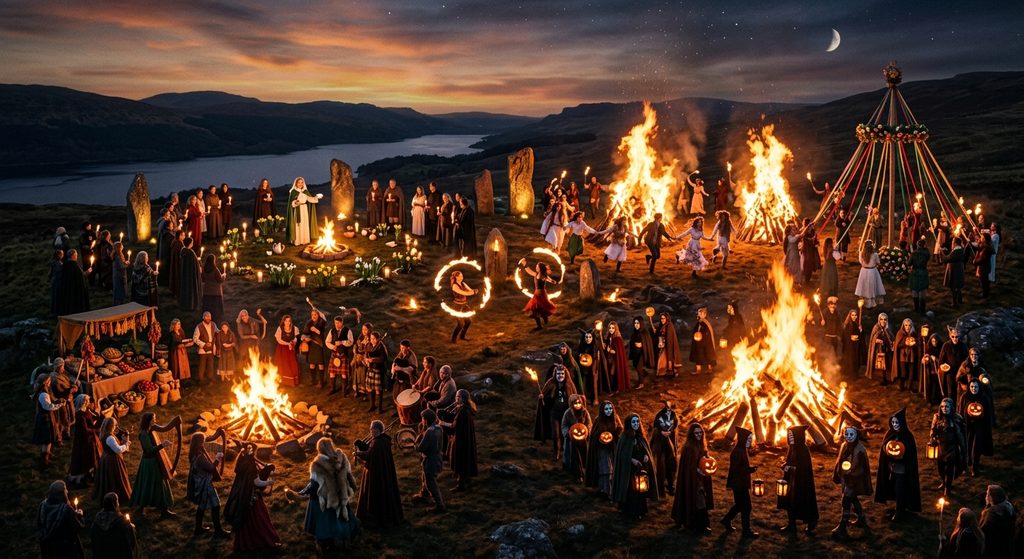
- Ostara (The Origin of Easter): This Celtic and Germanic festival celebrated the arrival of spring and earth’s fertility in honor of the goddess Eostre (from whom the English word Easter derives). Her sacred symbols were eggs (representing new life) and rabbits (representing fertility). The Church fully absorbed these symbols and the timing to celebrate the Resurrection of Christ.
- Litha (The Feast of Saint John): The summer solstice (around June 21st) was a Celtic festival of purification where massive bonfires were lit to give strength to the sun. The Church Christianized this event by moving it to June 24th to celebrate the birth of John the Baptist, keeping the pagan fire-jumping rituals completely intact.
- Imbolc (The Feast of Saint Brigid / Candlemas): An early February Celtic festival marking the very first signs of spring and the lambing season, dedicated to the goddess Brigid. The Church converted the deity into Saint Brigid of Ireland and overlapped the dates with Candlemas (The Purification of the Virgin Mary), preserving the Celtic tradition of blessing candles and homes.
Leave a Reply